Monday, July 03, 2006

Islam and the Blessed Virgin Mary


Loreto and Islam.

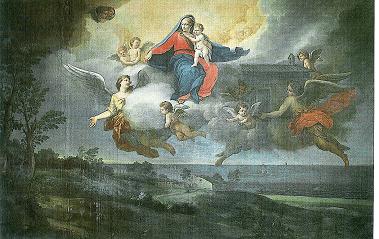
The Translation of the Holy House of Loreto.

I happened upon an interesting note on the web of a Muslim man stating he believed that peace between Islam and Christianity could very well come about through Our Lady. He said Muslims and Christians have devotion to her. Here is the article:

ROME - 3 July 2006
Mary can bring religions together says Muslim writer. An Egyptian Muslim and deputy director of a prominent Italian newspaper has suggested that Mary could be the figure to bring Christians and Muslims together.

Mr Magdi Allam of Il Corriere della Sera has launched an appeal in the pages of the national daily newspaper to Muslims in Italy to visit Marian shrines. The journalist said that he is convinced that the Virgin Mary is a meeting point between Christians and Muslims. "Mary is a figure present in the Koran, which dedicates an entire chapter to her and mentions her some thirty times. In Muslim countries there are Marian shrines that are the object of veneration and pilgrimage by Christian and Muslim faithful," he said. "Therefore, I believe that if this happens in Muslim countries, why can't it happen in a Christian country, especially in this historical phase in which we need to define symbols, values and figures that unite religions, spiritualities and cultures?" he asked.

In Allam's opinion, "the Marian pilgrimage of Loreto - Italy's National Shrine - could represent a moment of meeting and spiritual gathering between Muslims and Catholics, around Mary, a religious figure that is venerated by both religions." -ICS

Interestingly enough, he may be correct. I have always considered Our Lady's apparitions at Fatima to have at least some inferrence to Islam, since the name Fatima was the name of Mohamed's favorite daughter. Bishop Sheen also had said some things in this regard.

Along with the miraculous image of Our Lady of Good Counsel, the Holy House was once in Croatia and miraculously transported by angels to Italy. Many saints and popes have made the pilgrimage to Loreto, Bl. John XXIII went as a pilgrim to ask the Blessed Virgin's intercession for the Second Vatican Council. John Paul II had been there many times as well. It is a scientific marvel - the house, now enclosed in an edicule within the basilica, rests without foundations on the bare ground. (For further reading on the image of OL Good Counsel, see an earlier post on my other blog, Rome-ing Catholics.)

Both The Holy House and the image of Our Lady of Good Counsel were transported by angels away from Muslim invaders. The Sacred Image was carried from their onslaught of the Balkans. The Holy House was transported, first from the Holy Land to Croatia, and what seems now providential, to Italy. Some people dispute these stories as mere legends. I do not. I spent nearly a week at Loreto and never left the Holy House except when they closed the Basilica at night. I had been enraptured by it, literally.
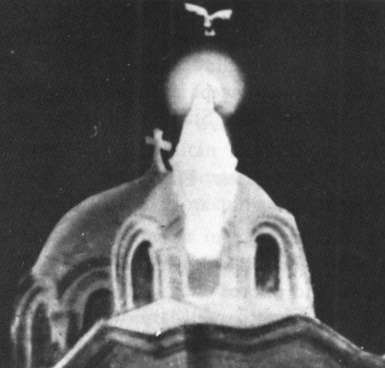
Photo of the Cairo apparition.


Finally, Our Lady appeared above a Coptic Church in Cairo, Egypt in the 1970's. Her apparitions were witnessed by thousands of people while the apparitions were even photographed. Our Lady said nothing however. Muslims and Christians both were witnesses to the Cairo apparitions that the Coptic Church later confirmed as being authentic. Our Lady promised at Fatima that in the end her Immaculate Heart would triumph, that Our Lord had entrusted the peace of the world to Her.

We need to pray our rosary I think.

Sunday, July 02, 2006

Devil in the details...


The title doesn't quite tell it.

"C'mon, it's just a fun movie!" That's what I tell people when they act surprised that I actually left the house to see a movie in a theatre and tell me my choice is wierd - for a guy. When I was just a boy I started out retail in fashion and went onto management for a large department store. A friend from all those years back stayed on and got a corporate position as Senior Designer. We sort of 'grew up' in a segment of the fashion business and had to know our stuff. I read Vogue, Women's Wear; I went to the markets, I knew who every designer was and who was wearing them, I also knew who all the top models were - by name. (Do you know who the first real super model was? Suzie Parker, a 1950's cover girl who did a stint in the movies.) Yeah, I knew too much, it was my job!

My friend and I both worked for a vice-president who was not unlike Meryl Streep's character in the film. He was a bitch too. Immensely talented and successful as well. Lucky for us, he liked us and we both learned a lot from him. His name was Andrew Markopolous, now deceased, yet his legacy lives on, with industry awards named after him, and people like my friend and I who will never forget him. Anyway, I digress, it's a fun film however, and it's entertaining for those who may have worked in fashion or retail, or for fashion magazines, or just anyone who follows fashion. It's a multi-billion dollar industry that employs a large segment of the population, so the film should do well. Having said that, I'll get to the point of this post.

Of course the devil doesn't wear Prada, he's a spirit and doesn't wear clothes, I think he just inspires their designs. Since the '6o's ready to wear designers have increasingly looked to the street for inspiration in their designs. Couture has followed suit. It's pretty obvious when most of the top designers feature barely clad models that look like hookers.


A Versace 'dress'.


Get back to the street, the supermarket, the office. The look is tight, and low. Even for men. Remember last year's Dolce and Gabbana's ad for men's jeans? It was hot, as the industry would say. Scandalously low rise jeans. Where'd they get that idea? The streets. Kids;
boyz and girlz wear their stuff so low you can almost see their stuff. It looks really bad on the fat ones. I don't know what they are supposed to wear, but don't dress like that, fat or anorexic. Little Blessed Jacinta of Fatima in 1918 repeated something Our Lady told her, "Many fashions will be introduced that will offend Our Lord very much - do not follow fashion." That was in 1918!

Years ago, early '70's to be exact, Carlo Carretto, a Little Brother of Jesus wrote a simple book titled, "The God Who Comes". It influenced me a great deal in the first stages of my conversion. In a chapter, "You'll all come to the same end unless you repent" where he discusses the need for repentance in our culture so steeped in hedonism - the pursuit of pleasure - not happiness. That was then! This is now! It was back then when you only saw women dressed as prostitutes who really were prostitutes. Or men dressed with revealing jeans that were usually always gay - but now the so-called "metrosexual" has evolved - non-gay men obsessed with fashion. In the chapter Caretto writes: "To begin with, we must go against the ideas of the day, for these are always opposed to the Gospel. We must resist 'the latest fashions and the spirit of the times,' which are almost always influenced by the evil one." That would be the devil.


Dolce and Gabbana ad.

Fashion is a clever manipulative game that makes tons of money for the purveyors. The cosmetic industry alone is a phenomenal money maker. If women really understood the mark up for the product and services they purchase - well, I think they do and it doesn't faze them. Age defying makeup, cosmetic surgeries. Shoes! Women love shoes. At major high-end retailers the mark-up on shoes is around 300%. A jacket from Christian LaCroix in the '90's was $20,000.00 - that was more than a modest car. I do not shop or read the trades any longer but I know for certain couture costs equally as much today. Why do women fall for this? And now men are doing likewise. Makeup for men? Manicures? Hair highlighting? I'd be embarrassed. It's a racket.

Fashion changes year to year, season to season, it takes people's money away, and distracts them from the essentials in life, it encourages people to become more vacuous and superficial, not to mention provocative and sensual - even an occasion of sin for others. The devil may not wear Prada, but he's in the details.

Friday, June 23, 2006

Solemnity of the Sacred Heart of Jesus


Behold this heart which has so loved men...

This is not the best reproduction of the image of the Sacred Heart but it is one that I like very much as it shows Our Lord offering us His heart, His love - presenting it to us freely, as He does in the Eucharist.

Don Marco sent me the hymn from the Office of Matins for the feast:

O Heart of God¹s Eternal Word,
Creation¹s origin and end:
How great the mystery of your love
To make of man, mere dust, your friend.
O Heart of flesh which has sustained
The wound we on ourselves inflict:
How great the mystery of your love
Outpoured on us the blind and sick.
O Heart of Jesus, strong and sure,
Obedient to the bitter end:
How great the mystery of your love
To suffer Golgotha¹s torment.
O Sacred Heart whose burning love
Craves to set all the world ablaze:
You yearn for us to share your life:
What can we offer but our praise?
O Heart of God the Father¹s joy,
O Heart of Christ, the Spirit¹s lyre,
What else have we in heaven but you,
Our morning praise is all desire. Amen.

Wednesday, June 21, 2006

Some thoughts on wearing the Scapular of Our Lady

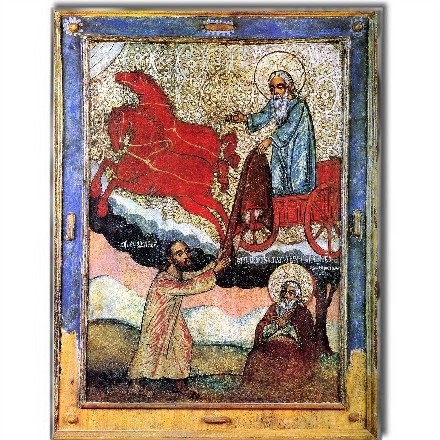
Todays first reading at Mass continues the cycle of the life and mission of Elijah culminating in what is referred to as the 'assumption' of the prophet and handing over to the prophet Elisha the prophetic charism. The icon pictured illustrates this well.


In the scripture Elisha prays "May I receive a double portion of your spirit." in response to Elijah's command to ask whatever legacy Elisha may have desired. Elijah replied, "If you see me taken up from you, your wish will be granted, otherwise not." The scripture states that a fiery chariot came between the prophet and his disciple and took Elijah up to heaven in a whirlwind, while the prophetic mantle fell at the feet of Elisha. Elisha tore his garments in mourning over the loss of his spiritual father and took up the mantle, rolling it up and striking the water of the river Jordan, causing it to divide, thus allowing him dry passage across the river bed. How many layers of spiritual significance to this story! Nevertheless, I have only one simple reflection, and that is regarding the Order of Carmel.


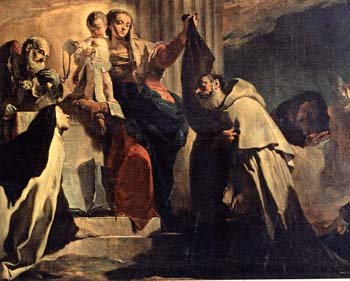
Pictured: St. Simon Stock receiving the scapular of Mt. Carmel.

First of all, the Order of Carmel has always seen the prophets Elijah and Elisha as the 'proto-founders' of the order. In the passage from Kings wherein Elijah sees the "little cloud rising from the sea" from his perch atop the summit of Mt. Carmel many have written that this little cloud prefigures the Virgin who would bear the Savior. Archeological evidence tells us hermit followers of Elijah inhabited Mt. Carmel even in Old Testament times, and of course Christian hermits lived there later, in the spirit of Elijah, hence the origins of the Order of Mt. Carmel.

Perhaps it is a stretch on my part but I have always seen the Scapular of Mt. Carmel somehow prefigured as it were, in this episode in the Book of Kings when Elijah passes on the mantel to Elisha. It seems to me when Our Lady gave the scapular to St. Simon there was a similar significance. To be sure it is a sign of her favor and protection, first to Carmel and then to the lay person who wears her 'livery' as the medieval word refers to it. Ponder the idea and consider it's meaning.

Without doubt there is a prophetic charism imbedded in the Order of Carmel, signified by Our Lady herself. The scapular of Mt. Carmel provides numerous benefits and graces for those who wear it, and it is a garment that the Church has highly praised and given many indulgences to. One may either wear the cloth scapular, which one must be enrolled in to enjoy all of the indulgences, or one may simply have it blessed by a priest and still enjoy the protection of the Mother God. A Scapular medal may also be worn in place of the cloth one, but the wearer must have been enrolled in the cloth scapular first in order to gain the same privledges. It all sounds so complicated, but it is not. Some people like to nit pick about how big it should be, or if the medal may substitute, but that makes it more of a fetish or talisman than a revered sacramental of the Church. (The Carmelite order has come out with revised conditions regarding the Scapular devotion.)

There are many other scapulars of various orders in the Church, as well as those that have cropped up from private revelations. If one's devotion moves one to wear these, that is fine, but sometimes I see the occasional person wearing all of them at once, as well as numerous medals and crucifixes - that's a bit off. Sometimes people use sacramentals to make themselves feel holy or appear holy, sometimes they use them superstitiously, all of that should be discouraged. In today's Gospel Our Lord cautions against "performing our religious deeds in order that people may see them."

For the laity however, the scapular is normally worn beneath one's outer garments, the devotion is a matter of the heart, it signifies our consecration to God, and the entrustment of ourselves to the Immaculate Heart of Mary, as well as a guarantee of Our Lady's protection and guidance.

The affiliation to the Order of Carmel (indeed simply being a baptized and confirmed Roman Catholic) gives our lives a prophetic character, that of witnessing to our faith, albeit sometimes silently and hidden, much as the Scapular we discreetly yet devoutly wear next to our heart.
.
Icon: The Assumption of the prophet Elijah.

Tuesday, June 20, 2006

June 21, St. Aloysius (Louis) Gonzaga


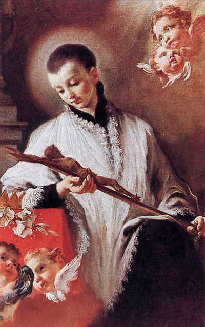
St. Aloyisius Gonzaga

The young Jesuit cleric was born to a princely familyof Castiglione in Lombardy, Italy in 1568. He renounced his inheritance and legally turned it over to his brother, after which he then entered the Society of Jesus. Known for his angelic purity and perfect observance of the rule, he died after contracting the plague while ministering to those afflicted.

He is an attractive saint for youth as well as young novices in religious life. St. Aloysius pray for us who have not followed your innocence that we might at least follow the example of your penance and charity towards the poor. Amen.

Sunday, June 18, 2006

The secret to prayer; Lectio Divina (For the feast of St. Romuald, June 19)


Pictured; The Vision of St. Romuald.

St. Romuald saw in a vision, like the prophet Jacob, his monks ascending a ladder to heaven. It brings to mind the classic practice of prayer, known as Lectio Divina; the monastic way of prayer our Holy Father Pope Benedict XVI hopes will have something of a renaissance in our time. It is perfectly compatible with the Teresian method of 'mental prayer' - when St. Teresa of Avila writes that she went to prayer with a book, I feel certain she understood this manner of prayer.

The Ladder of Monks, Guigo the Carthusian
On Lectio Divina:

ONE DAY while I was occupied with manual labor
Cum die quadam corporali manuum labore occupatus
I began to reflect on man’s spiritual work,
de spiritali hominis exercitio cogitare coepissem,
and suddenly four steps for the soul came into my reflection:
quatuor spiritales gradus animo cogitanti se subito obtulerunt
reading,
meditation,
prayer,
[and] contemplation
lectio
scilicet meditatio,
oratio
contemplatio

THIS is a ladder for monks
by means of which they are raised up from earth to heaven
qua de terra in coelum sublevantur,

It has [only a] few separate rungs, yet its length is immense and incredible:
gradibus quidem distincta paucis, immensae tamen et incredibilis magnitudinis,

for its lower part stands on the earth,
cujus extrema pars terrae innixa est,

while its higher [part] pierces the clouds and touches the secrets of heaven.
superior vero nubes penetrat et coelorum secreta rimatur


JUST as its rungs have various names and numbers,
Hi gradus sicut nominibus et numero sunt diversi

so also so they differ in order and merit;
ita ordine et merito sunt distincti;

and if one diligently searches out their properties and functions
quorum proprietates et officia,

- what each [rung] does in relation to us, how they differ from one another and how they are ranked-
quid singuli circa nos efficiant, quomodo inter se differant et praeemineant, si quis diligenter inspiciat,

he will regard whatever labor and study he expends as brief and simple compared with the great usefulness and sweetness [he gains].
quidquid laboris et studii impenderit in eis breve reputabit et facile prae utilitatis et dulcedinis magnitudine.

Reading is careful study of [Sacred] Scripture,
Est autem lectio sedula scriptuaru

with the soul’s [whole] attention:
cum animi intentione inspectio.

Meditation is the studious action of the mind
Meditatio est studiosa mentis actio,

to investigate hidden truth, led by one’s own reason.
occultae veritatis notitiam ductu propriae rationis investigans.

Prayer is the heart’s devoted attending to God,
Oratio est devota cordis in Deum intentio

so that evil may be removed
pro malis removendis

and good may be obtained.
vel bonis adipiscendis.

Contemplation is the mind suspended -somehow elevated above itself - in God
Contemplatio est mentis in Deum suspensae quaedam supra se elevatio

so that it tastes the joys of everlasting sweetness.
eternae dulcedinis gaudia degustans

HAVING assgned descriptions to each of the four rungs,
Assignatus ergo quatuor graduum descriptionibus,

we must see what their functions are in relation to us.
restat ut eorum circa nos officia videamus.


III THE FUNCTIONS of THESE AFOREMENTIONED RUNGS
III QUAE SUNT OFFICIA PRAEDICTORUM GRADUUM
FOR the sweetness of a blessed life:
Beatae vitae dulcedinem

Reading seeks;
lectio inquirit,

meditation finds;
meditatio invenit,

prayer asks;
oratio postulat,

contemplation tastes.
contemplatio degustat


Reading, so to speak, puts food solid in the mouth,
Lectio quasi solidum cibum ori apponit,

meditation chews and breaks it,
meditatio masticat et frangit

prayer attains its savor,
oratio saporem acquirit,

contemplation is itself the sweetness that rejoices and refreshes.
contemplatio est ipsa dulcedo quae jocundat et reficit.


Reading concerns the surface,
Lectio in cortice,

meditation concerns the depth
meditatio in adipe,

prayer concerns request for what is desired,
oratio in desiderii postulatione,

contemplation concerns delight in discovered sweetness.
contemplatio in adeptae dulcedinis delectatione. ( taken from "The Ladder of Monks")

June 19: Feast of St. Romuald


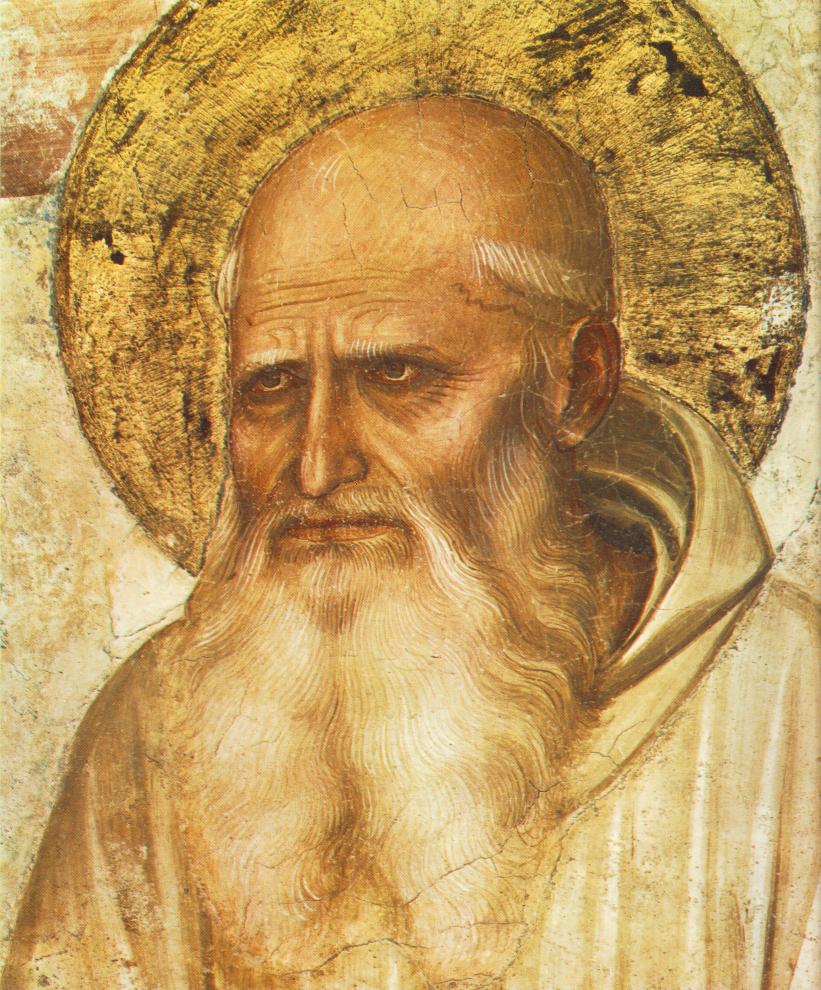
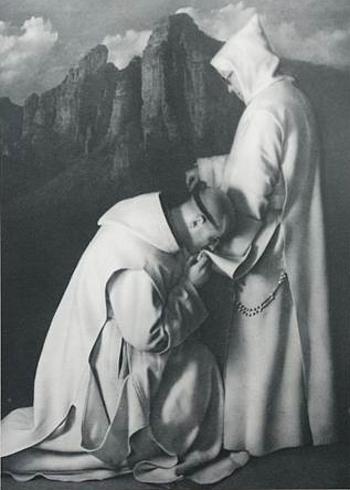
Pictured, St. Romuald, in the white habit of the Camaldolese, by Fra Angelico.

St. Romuald (952-1027) entered the Benedictines in atonement for his father's sin of murder - he killed a relative. Seeking to live a more solitary life as a hermit, he left the cenobitic life of the Benedictine abbey to search for an appropriate refuge. He eventually founded monastic communities throughout northern and southern Italy. He reformed the monastic life of his time, which had become rather decadent. St. Romuald's most famous hermitage is in Camaldoli, near Arezzo in Italy. In the United States we have two Camaldolese foundations, both different congregations with different expressions of the eremetic life. One is in Big Sur, California, the other in Bloomingdale, Ohio.

Shortly after my conversion and return to the Church (thirty some years ago now) I wanted to leave everything and enter the strictest monastery possible. I really believe it was much more than first fervor driving me, but I quit my job and took to the road, never realizing that this was the begining of my pilgrimage of prayer in life. I found myself at Steubenville and moved on to Holy Family Hermitage, the more strictly enclosed and eremetical of the two Congregations of Camaldolese in the U.S. - at least they were then.


St. Conrad of Parzham


The Prior sent a lay brother to the gate to send me away. (The Prior evidently was having some psychological problems as well as being frustrated that 'charismatic' students were just showing up unanounced at the hermitage, hoping to pray with the hermits.) The lay brother was older and looked a little bit like St. Conrad of Parzham. He was so kind to me and did his best to explain why the Prior refused to see me. He took me on a secret tour of the enclosure and prayed with me in the chapel, but in the end he had to send me on my way. He gave me the bread he was to eat that day to take with me. I often wonder if he continued to pray for me. Because of his age, I expect that he is now dead, I hope he still remembers me in heaven.

Feast of Corpus Christi


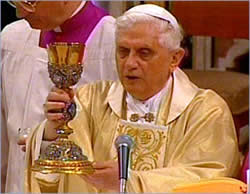
Holy Father Pope Benedict XVI at the elevation during the Consecration of the Mass.


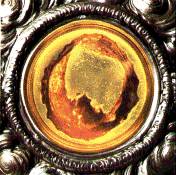
The remaining sign of the Eucharistic Miracle of Lanciano. The Eucharistic species remains intact, Therefore it can be considered something of an ongoing miracle.


Eucharistic Miracle
Lanciano, Italy 8th Century A.D.

(Taken from "The Real Presence" website.)

Ancient Anxanum, the city of the Frentanese, has contained for over twelve centuries the first and greatest Eucharistic Miracle of the Catholic Church. This wondrous Event took place in the 8th century A.D. in the little Church of St. Legontian, as a divine response to a Basilian monk's doubt about Jesus' Real Presence in the Eucharist.

During Holy Mass, after the two-fold consecration, the host was changed into live Flesh and the wine was changed into live Blood, which coagulated into five globules, irregular and differing in shape and size.

The Host-Flesh, as can be very distinctly observed today, has the same dimensions as the large host used today in the Latin church; it is light brown and appears rose-colored when lighted from the back. The Blood is coagulated and has an earthy color resembling the yellow of ochre.

Various ecclesiastical investigation ("Recognitions") were conducted since 1574.
In 1970-'71 and taken up again partly in 1981 there took place a scientific investigation by the most illustrious scientist Prof. Odoardo Linoli, eminent Professor in Anatomy and Pathological Histology and in Chemistry and Clinical Microscopy. He was assisted by Prof. Ruggero Bertelli of the University of Siena.

The analyses were conducted with absolute and unquestionable scientific precision and they were documented with a series of microscopic photographs.These analyses sustained the following conclusions:

The Flesh is real Flesh. The Blood is real Blood.
The Flesh and the Blood belong to the human species.
The Flesh consists of the muscular tissue of the heart.
In the Flesh we see present in section: the myocardium, the endocardium, the vagus nerve and also the left ventricle of the heart for the large thickness of the myocardium.
The Flesh is a "HEART" complete in its essential structure.
The Flesh and the Blood have the same blood-type: AB (Blood-type identical to that which Prof. Baima Bollone uncovered in the Holy Shroud of Turin).
In the Blood there were found proteins in the same normal proportions (percentage-wise) as are found in the sero-proteic make-up of the fresh normal blood.
In the Blood there were also found these minerals: chlorides, phosphorus, magnesium, potassium, sodium and calcium.
The preservation of the Flesh and of the Blood, which were left in their natural state for twelve centuries and exposed to the action of atmospheric and biological agents, remains an extraordinary phenomenon.

Another miracle contributing to the feast of Corpus Christi.

Bolsena-Orvieta, Italy
A priest had difficulties believing in the Real Presence, and blood began seeping out of the Host upon consecration. Because of this miracle, Pope Urban IV commissioned the feast of Corpus Christi, which is still celebrated today. ("The Real Presence")

Friday, June 16, 2006

Mother Teresa's rule: No fund raising.

Missionaries of Charity of Blessed Mother Teresa of Calcutta.

I had an incident one day a month or so ago in the Store I work in. It made me do a lot of thinking. The Missionaries of Charity came in to see me. Every time they visit the Store I feel like I'm seeing Mother. Sometimes I even lapse and call them Mother instead of Sister. No offense to any other religious order but these nuns are exceptional examples of the religious life; they remain just as faithful to radical poverty and their original charism as when they were founded. They are women of prayer as evidenced by the rosary they carry in their hands and are actively praying as you meet them - their rosaries do not just hang on their belts.

When you encounter the sisters you cannot help but tangibly feel their charity. I love them. They had to talk to me about a mistake we made in our catalog. It concerns one of those latex wrist bands, a JPII memorial item, a piece of "I could care less merchandise" that is over-priced as well as a post-peak trend item. A seemingly insignificant item. In our catalog copy, that we took from the vendor we bought it from - I must hasten to say - it states that "a percentage of the proceeds from sales of this item go to the Missionaries of Charity." Mother Marcella, the provincial in the U.S. contacted me a few months ago that this was in error. I was totally unaware of the copy and promotion. I assured her I would look into it. I explained I had no knowledge of the connection and told her I knew very well that the Missionaries and Mother have always had a prohibition against fund raising. I knew that! I assumed everyone did. I told management and explained how important the matter is, they seemed to understand. And guess what happened? Another re-mail catalog had already gone to press and was subsequently mailed out. You can imagine the embarrassment for me and the Company when Sister came in and talked to me about the same mistake that had not been taken care of. I explained as best I could, I said I would take care of it for them and I apologized. I went immediately to the Owner of the Company and explained to him the problem. I called the Company we buy the items from and explained the situation. He explained that he had bought the business from another fellow and he was the one who promoted the item that way and he simply continued it. As I spoke to him on the phone he removed the line from his web site. I knew it was going to be taken care of. (And it was - immediately.)

The entire episode gave me pause however. The Missionaries themselves always remind me of the parable of the goats and sheep being judged at the end of time, because they are so hidden and humble and also because Mother often referenced this parable. (I shuddered because of what scripture says in regard to merchants and how they will be judged!) What struck me about this Gospel however is how the people to the right hand of our Lord, those who have done well, question Jesus saying, "When did we see you hungry and give you food? Naked and we clothed you?" and so on. They honestly did not know until Jesus told them that when they did this to the least among them that they did it to Him. The blessed were totally unaware of their good works - they were simply acting from the goodness of their hearts. They neither measured nor tallied their good works - they simply were acting and doing what was right, the right hand not knowing what the left was doing‌.

It is human nature to take an account of possessions, money, honors, etc. We deduct our charitable contributions from our taxes. (In our Store we even sell "Sacrifice Beads" a pious custom adopted from the life of Therese of Lisieux, you're supposed to count your sacrifices throughout the day by moving a bead every time you do a good work. Unless you are about five years old, as Therese was when she used it, I'd strongly recommend not using such a device. (It's for training kids - not for adults.)

We often carry this accounting practice into our spiritual lives. Many who practice prayer like to figure out what stage of prayer they are at. In my Store we carry a book called "The Stages of Prayer" written by an former Discalced Carmelite nun, it more or less 'retarded' my own progress in prayer since it focused so much on stages and levels of prayer - it isn't the best study on the practice of prayer. Teresa of Avila's famous book, "The Interior Castle"‌ documents the various stages of prayer as well. This is great for directors or to inspire a person to strive for the higher gifts, but it's a waste of time, in my opinion, to use it to try and figure out where you are at in the spiritual life. You're just measuring again. You're keeping score of your virtue - similar to what an overly solicitous parent does in regard to their kids sports activities or academic life. Jesus said not to let your right hand know what your left hand is doing and to keep your works of mercy secret. In other words forget your self and mortify your self seeking. Love and act out of love, "Love and do what you will" as St. Augustine wrote. We should neither count the cost nor the accomplishments of our charity - or prayer for that matter. We might take it a step further, maybe we should not use other people's charitable mission or accomplishments to raise funds or make a sale. If we are going to do an act of charity, we ought to do it in the name of Jesus, for Jesus, and let Him alone know we are doing it. Don't try to make a profit off the backs of the poor.

Remember the Pharisee and the Publican, the one guy recounted to God all of his merits and good deeds, he tithed, gave to the poor, he did a lot of good. (What if he was one of those who traipsed by that other guy laying on the side of the road that the Samaritan helped?) But the one who was justified was the Publican - who had nothing but his sins. At the end of her life St. Therese proclaimed she went to God "empty handed“ not unlike the Publican.

I think that is how the Missionaries of Charity think of themselves as well. Yeah, they never take account of what they do, they simply follow Jesus.

(We eventually got rid of the phrase in our catalog. The Missionaries were happy and hopefully we learned a good lesson.)

Saturday, June 03, 2006

How GLBT people are welcome in the Church...


Just repent!

People with same sex attraction or homosexual tendencies, even those who consider themselves gay are indeed welcome in the Roman Catholic Church. The Church proclaims Christ's message in the Gospel to all persons; "The kingdom of Heaven is at hand. Repent! And believe in the Gospel!" The Church calls all to repentance and reconciliation. People with homosexual orientation are called to repentance as are all members of the Church. Communion is given to all of those who have converted and returned to Christ through the Sacrament of Penance. Christ calls us to deny our very selves, take up our cross and follow Him. He calls us to change, to reform our lives - we may not and can not demand that He change or that the Church change or that Church teaching should change. Truth is immutable.

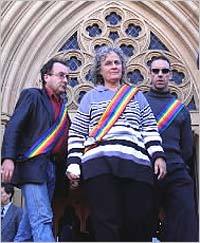
For those who are unfamiliar with the "Sashers" - presented here is their statement on their 'core values' taken from the Dignity website: [http://www.dignitytwincities.org/}

Mission statement of the Rainbow Sash movement:

"Our Core Statement -

1)In wearing the Rainbow Sash we proclaim that we are lesbian, gay, bisexual, and transgender people who embrace and celebrate our sexuality as a sacred gift.
2)In wearing the Rainbow Sash we call the Roman Catholic Church:
to honor our wisdom and experience;
to enter into public dialogue with us;
to work with us for justice and understanding.
Together, let us seek a new appreciation of human sexuality in all of its diversity and beauty.

Our Core Action
The movement's core action, or ritual expression, involves the symbol of the Rainbow Sash. The sash is a strip of rainbow colored fabric which we wear over our left shoulders when we attend the celebration of the Eucharist. Carrying this symbol, we publicly claim our place at Christ's table, sacramentally expressing the truth of our lives, and calling the Church to embrace a new day of integrity and freedom.

The movement began on Pentecost Sunday, 1998, at St. Patrick's Cathedral in Melbourne, Australia, when a group of seventy people attended Mass wearing the Rainbow Sash. Hence, Pentecost Sunday each year is the primary day when members of the movement don the Rainbow Sash and present themselves in their local cathedrals to celebrate the Eucharist with their fellow Catholics. Their presence at the cathedral is preceded by a letter to the local bishop explaining what the sash means, and informing the bishop of when and where they will be present."

It should be noted that it is not God's gift to a person to either be gay, lesbian, bi-sexual, or trans-gender. The mystics have certainly seen suffering as a grace or gift from God in so far as it contributes to the sanctification of the person. Therefore the mortification inherent in suffering from an "objective disorder" could indeed be redemptive in proportion to the person's efforts to overcome these tendencies by grace, personal effort, and with the help of prayer and the sacramental life of the Church. In this respect one may consider it a "gift" on the pre-condition that the person has repented of any sin committed in acting out sexually. If one reflects upon the verse from the Easter "Exultet!"; "O happy fault, O necessary sin of Adam, that gained for us a Savior!" Then one may understand that God draws good, even from sin as it were - after our repentance.

Thursday, June 01, 2006

The Smoke of Satan?


New Accusations Against Other Legionary Priests?

What a mystery this entire matter of Fr. Marciel and his order. The Legionaries of Christ is one of the finest new orders in the Church, a sort of later day Jesuit-style militia, with fierce loyalty to the Pope and the Magisterium.

I have known a couple of men who have left the order, one was under psychiatric counselling for a while, the other also had some negative things to say about the Legion's formation program, but neither ever implied any type of sexual abuse had gone on. I know I seem to like this word, but at most it sounded more like a 'cult' than anything else, that is how they described their experiences to me at least. However, I dismissed it as information coming from two disgruntled former members. Nothing more.

Fr. Marcial Maciel Dellogado, pictured above receiving a blessing from Pope John Paul II. Everything I had heard or read about him left me with the impression that he was a very holy man. In fact, I was certain he had to be to have such a prolific order of priests in addition to his considerable following of (more often than not) affluent laity. I cannot remember if it is Garrigou-Lagrange or St. John of the Cross who wrote that God normally bestows great graces and mysticl gifts to the founders of religious orders as a sort of paternal legacy for the order to partake in for generations afterwards. If all of this is true about Fr. Marcial, would it follow that a certain amount of disorder or at least dysfunction could be his legacy?

Read on:

"One of Father Maciel's original accusers, Paul Lennon, M.A., dropped the following bombshell in what may be yet another nuclear bomb for the Legion of Christ and its Regnum Christi apostolates in this exclusive interview with The Wanderer: Since the May 19 statement on Father Maciel from the Holy See, more alleged victims have come forward claiming sexual abuse, not only by Father Maciel, but from other priests of the Legion of Christ. He said that due to the stigma attached particularly to male sexual abuse, the new accusers wish to remain anonymous at this time. Lennon was with the first class of Legionary priests ordained from Ireland back in 1969.What Does It All Mean?"Among canon lawyers, there is an expression, where there is smoke, there is fire," said Pete Vere, J.C.L. "As more and more allegations come forward, it is very difficult to believe that something may not have happened," he said.However, Vere added that while he personally believes that based upon the actions of the Holy See with Father Maciel, "many of the allegations have been substantiated," he was quick to caution that that he "did not have access to the evidence.""Inviting Fr. Maciel to live the remainder of his days as a penitent, without the public exercise of his ministry has a twofold effect: it affirms that the Church takes the charges seriously, considers them to be credible and punishable; secondly, it attempts to affect the ultimate salvation of Fr. Maciel by urging him to repentance," said Timothy Ferguson, J.C.L., a 38-year-old canonist from Clair Shoals, Michigan."It is more than a mere slap on the wrists," he said, "as it affects the one thing most people hold very dear, his reputation.""Since this is referred to as an 'invitation' rather than an 'imposition,' it doesn't fall under canon 1342.2, which forbids the declaration of perpetual penalties without a judicial process," Ferguson said. As an invitation, there would seem to be no means for recourse or appeal against it," he said.In other words, if Father Maciel had refused the Holy See's invitation to serve the rest of his life suspended from public ministry in penitence and prayer, Ferguson said he believed it "would necessitate the initiation of a penal process.""I think what we're seeing with Benedict XVI's papacy, he is standing for what is not popular, but what is right," said canonist Vere. "With someone like Fr. Maciel and his stature, it is going to be cleared through the Pope, and this is just another example of him showing he will do the right thing even when it is very painful," he said." (See Seattle Catholic for the original article.)

Standing at Mass


Just a thought...

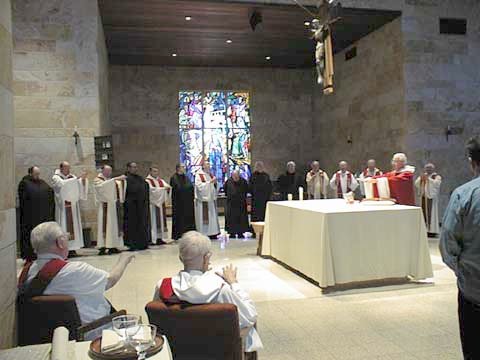
I think I figured out where this comes from - standing at Mass that is. Dah! I knew this before yet obviously never gave it much thought. The whole concept developed in the monasteries. It stems from the monastic communal Mass. The priests circle the altar for concelebration, since they are monks and the non-ordained brothers are also monks, the community stands together. Some monasteries invite the retreatants up around the altar with the community. The retreatants (priests, laymen, liturgists) obviously went back to their parishes and diocese with these innovations. I was in a Trappist monastery for a while, when I left I could always recognize who had been on retreat at an abbey by the way they bowed to reverence the Blessed Sacrament instead of genuflecting. (Benedictine custom is a profound bow instead of genuflecting.) Lay people think monastic practices are more holy I guess. They like the novelty - hence the assimilation into their parish practice. So maybe some liturgical abuses really started out with good intentions, but then took on a life of their own. I think St. Teresa of Avila said, "the road to hell is paved with good intentions." I really prefer kneeling and genuflecting, if I was in a monastery, I would conform to the custom of the place.

Sunday, May 28, 2006

The Little Pope...


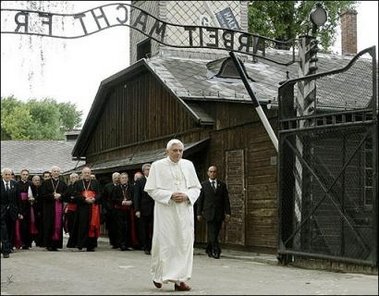
Benedict XVI at Auschwitz.

He insisted upon walking in alone, unescorted.


The German Pope.

What are these days we live in?

Viva il Papa! Vicar of Christ!


(I wish I had a better photo.)

Saturday, May 27, 2006

Papa Benedetto


Pope Benedict XVI in Poland. In every photo he looks absolutely delighted and very much at ease with being the Pope.

The Holy Father is enjoying a tremendous welcome in Poland, the German Pope speaking to the Poles in their native language - does that not seem to assuage, somewhat, the crimes of Nazi Germany on a spiritual level perhaps?

Speaking to the crowds he expressed his hope of beatifying his "beloved Predecessor" and called upon the faithful to pray for this to happen soon. Many hoped and half expected that he would beatify John Paul II on this trip to Poland, but it doesn't look as if that happened.

Viva il Papa!

Monday, May 22, 2006

The Monsignor


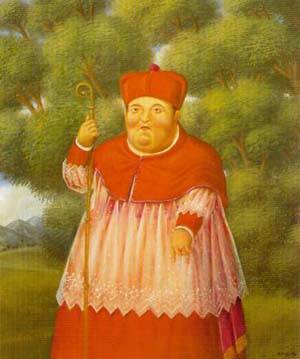
"Monsignor" - Fernando Botero

As one might expect,Botero is one of my favorite contemporary painters. Others are George Tooker (deceased) Jared French (deceased) and Frida Kahlo (deceased) -to name a few.

Botero's clerical paintings certainly resonate with me. Their voluminous presence does not imply a shred of mockery, nor is it meant to. Their baroque oppulence says much more about status, position, worldly honor, even pomposity, etc. Nevertheless, in our anorexic culture the images remind me of the more common temptations vexing the celibate. If one successfully avoids sins of impurity, the next greatest temptation is usually gluttony, or seeking in food consolations the denial of intimacy imposes. This means of course that the celibate has not developed an adequate interior life that ought to be the reward of the vow of chastity, as well as the defense against loneliness. An unhappy celibate often uses food to fill a void, or deal with an unresolved conflict. Sometimes the celibate does use sex, sometimes possesions or travel, sometimes alcohol or drugs, and sometimes in severe cases, it's all of these things. Aside from all of this, I just like Botero's work.

From the Dialogue


Pictured, St. Catherine of Siena, beseiged by devils, but she herself is not one. (Refer to my post yesterday.)

Still troubled by events in the Archdiocese and deceptive clergy, I returned in prayer to the Dialogue of St. Catherine of Siena. She wrote about the troubles and scandals of her own day, not in order to spread scandal but to reassure the faithful that Our Lord was aware of what was going on and was going to remedy it. She spoke that her words might bring to repentence those who offend God and give scandal to the faithful. That we might listen to her discourse again, I will quote from the Dialogue concerning homosexual priests.

"I am telling you this to make you see what great purity I demand of you and them, and especially of them (priests), in this sacrament. But they do just the opposite to me, for they come to this mystery wholly impure - and not simply with the sort of impurity and weakness to which all of you are naturally inclined because of your weak nature (although reason can calm its rebellion if free choice so wills). No, these wretches not only do not restrain their weakness; they make it worse by committing that cursed unnatural sin. As if they were blind and stupid, with the light of their understanding extinguished, they do not recognize what miserable filth they are wallowing in. The stench even reaches up to me, supreme Purity, and is so hateful to me that for this sin alone five cities were struck down by my divine judgment. For my divine justice could no longer tolerate it, so despicable to me is this abominable sin. The stench displeases not only me, as I have said, but the devils as well, those very devils these wretches have made their masters. It is not its sinfulness that displeases them, for they like nothing that is good. But because their nature is angelic, that nature still loathes the sight of that horrendous sin actually being committed. It is true that it was they (the devils) who shot the poisoned arrows of concupiscence, but when it comes to the sinful act itself they flee..."

Perhaps I will do best in the future to simply let the saints speak for me, although someone will still attempt to refute them as well. Our Lord is aware of what is going on, yet why does He delay the correction? St. Catherine pray for us for patience - but not too much patience! With your prayers help us in our repentance to be faithful to the Holy Father and the dogma of faith. Amen.

Sunday, May 21, 2006

Painting of a Bishop

"Bishop in the Woods" Fernando Botero

I like this image as well. It speaks to me. Representational art is more effective in expressing ideas - for me at least - than words. Sometimes when I express myself in words it sounds too harsh or mean-spirited. When I paint something, and maybe when Botero and other artists do so, even if its "in your face" one may always excuse what may seem confrontational. If a painting is naive, as many Latin American works can be, and the style I like, one might overlook many things, dismissing it in precisely that way, calling it naive. Thus the painter may speak his mind with impunity.

Monday, May 15, 2006

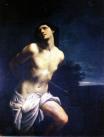
The myth of St. Sebastian.


Who was he anyway?
Is it true what some people say?

The dates of St. Sebastian's martyrdom are not known. In fact very little is actually known about him save that he was a Roman soldier martyed under Diocletian and he was buried on the Appian Way where his catacombs exist today. (St. Philip Neri used to pass his nights there in prayer.) Sebastian's feast day is January 20. St. Ambrose claims Sebastian was born in Milan, others claim Gaul as his birthplace.

The classic story is that St. Sebastian was an officer in the Roman army and arrested for being a Christian. He was sentenced to death to be shot with arrows. Bound to a column or a tree, the archers left him for dead. St. Irene, the widow of another martyr discovered he was still alive when she went to collect his body for burial. She nursed him back to health and it is said that Sebastian continued to witness and evangelize his fellow troops. (In the ancient hagiographies there is a lengthy exortation to martyrdom supposedly spoken by Sebastian. It's a beautiful treatise and may be found in an Orthodox book called, "The Arena" by Archbishop Brianchinov.) Eventually the Emperor learned of Sebastian's recovery and had him arrested once again and ordered him to be battered to death with cudgels, which finally killed him.

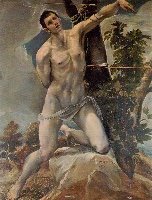
Sebastian has been venerated since the earliest ceturies but it was in the Renaissance that his cult became widespread in the West, due mainly to the many painters who chose to depict his dramatic martyrdom. He is most always depicted as a young, robust, athletic, and handsome man - nearly naked and bound to a tree, shot through with arrows. For centuries he has been the patron of athletes and soldiers and because of his faith and courage he became popular as a role model for boys and men.

I do not know how long ago homosexuals decided St. Sebastian was their special patron, but somewhere along the line they did. There is absolutely no historical foundation for this claim. Anyone may claim a saint to be their personal patron but it is not morally permissable to claim a saint as a patron for a sinful way of life. How did this distortion arise?

To be sure it is the celebration of the male physique when painters depicted him half naked. Homosexuality is much about physical attraction and narcissism, hence the attraction to a naked saint. His being tied to a tree may appeal to the more base behaviors some homosexuals engage in, known as bondage and discipline. I would wager the entire myth is based upon wishful (if not lustful) thinking. There exist fictional stories of his life that claim he was a homosexual officer attached to the Roman Imperial Court. The only tale that could possibly be tolerated is the one that says he was martyred because when he became a Christian he renounced and condemned homosexual activity and therefore was put to death. Naturally active homosexuals reject that story, nevertheless it too is fabricated.

Those who wish to promote the homosexual agenda will claim anybody and everybody as being gay, it's a gradiose lie. As a martyr however, Sebastian's intercession is powerful with God, and since he was a "whole" and uncorrupted man, he would indeed be a good patron for anyone struggling with same-sex attraction - especially men. (At another date I'll dispel the myth about the saint lesbians claim as their own.)

Saturday, May 13, 2006

May 13


John Paul II and Sr. Lucia

On the day of the beatification of her cousins Jacinta and Francisco.

They died in the same year and they were both chosen by Our Lady - she, to spread devotion to her Immaculate Heart, and he - he was the Pope of the prophecies, her servant and instrument. It was 25 years ago today that her hand guided the bullet that was to kill him, yet she saved his life. He understood the meaning and import of Fatima in a new light. Of all the Pope's to know the "third secret" he was the one who understood it and revealed it to the Church and the world. This extraordinary intellectual Pope with the simple piety of a peasant, he knew the secret. I am convinced that this is what motivated him. He is Our Lady's Pope, the Fatima Pope, and I dare say, the Pope of John Bosco's vision as well. He has led us into the new millenium and now watches over us from Heaven. Sr. Maria Lucia de Jesus of the Immaculate Heart and Pope John Paul II, with the little Shepherds, Francisco and Jacinta, pray for us now and at the hour of our death. Amen.