Showing posts with label saints and abuse. Show all posts

Friday, January 20, 2012

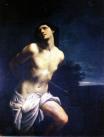
Exposing the real St. Sebastian - redux.


Because it bears repeating.  (I know!  I said 'bears'!)*

Look - everyone needs their patron saints, but it might not be so wise to try and remold them into our own image and make up things about them.  Take St. Sebastian, whose feast we celebrate today...

Who was he anyway?

Is it true what some people say?

The dates of St. Sebastian's martyrdom are not known. In fact very little is actually known about him save that he was a Roman soldier martyred under Diocletian and he was buried on the Appian Way where the catacombs (his tomb) exist today. (St. Philip Neri used to pass his nights there in prayer.) Sebastian's feast day is January 20. St. Ambrose claims Sebastian was born in Milan, others claim Gaul as his birthplace.

The classic story is that St. Sebastian was an officer in the Roman army and arrested for being a Christian. He was sentenced to death to be shot with arrows. Bound to a column or a tree, the archers left him for dead. St. Irene, the widow of another martyr discovered he was still alive when she went to collect his body for burial. She nursed him back to health and it is said that Sebastian continued to witness and evangelize his fellow troops. (In the ancient hagiographies there is a lengthy exhortation to martyrdom supposedly spoken by Sebastian. It's a beautiful treatise and may be found in an Orthodox book called, "The Arena" by Archbishop Brianchinov.) Eventually the Emperor learned of Sebastian's recovery and had him arrested once again and ordered him to be battered to death with cudgels, which finally killed him.

Sebastian has been venerated since the earliest centuries but it was in the Renaissance that his cult became widespread in the West, due mainly to the many painters who chose to depict his dramatic martyrdom. He is most always depicted as a young, robust, athletic, and handsome man - nearly naked and bound to a tree, shot through with arrows. For centuries he has been the patron of athletes and soldiers and because of his faith and courage he became popular as a role model for boys and men.

I do not know how long ago the homosexual community decided St. Sebastian was their special patron, but somewhere along the line they did. There is absolutely no historical foundation for this claim. Anyone may claim a saint to be their personal patron but it is not morally permissible to claim a saint as a patron for a sinful way of life. How did this distortion arise?

To be sure it is the celebration of the male physique when painters depict him half naked - it is also probably the reality of the circumstances surrounding the execution. However, homosexuality is much about physical attraction and narcissism, hence the attraction to a naked saint. His being tied to a tree may appeal to the more base behaviors some homosexuals engage in, known as bondage and discipline. I would wager the entire myth is based upon wishful (if not lustful) thinking.

There exist fictional accounts of his life which claim he was a homosexual officer attached to the Roman Imperial Court. The only tale that could possibly be accepted, for those prone to flights of fancy, is the one which claims he was martyred because he renounced and condemned homosexuality (for the modern mind: homosexual acts) in and through his conversion to Christianity, which resulted in his death. Naturally active homosexuals reject that story, which in turn happens to be another novel fabrication anyway.  I think it was just a crime to be Christian that got him martyred, but I digress.

Those who wish to promote homosexuality sometimes attempt to out anybody and everybody as being gay, I regard it as simple conjecture by guilty bystanders at best, although sometimes it is a deliberate, grandiose lie. (Everyone knows Liberace was straight.  What?) 

However, as a martyr, St. Sebastian's intercession is powerful with God, and since by his baptism he became a "whole" and uncorrupted man, he would indeed be a good patron for anyone struggling with un-chastity and or same-sex attraction - especially men - or lesbian weight lifters.  What? 

Likewise, I'm not sure there is anything to worry about for those few who erroneously believe Sebastian was a 'gay' saint. I'm convinced the Saint's charity would compel him to pray for their conversion, regardless of their misunderstanding, and if they keep praying, even though they see things in a different way than the Church, perhaps, since the door of their heart is already open, the Holy Spirit will help them accept the truth and see things another way.

*'bears' - 'bares'.  get it?  Sebastian is sometimes shown bare-naked.

Art:  I have often painted St. Sebastian, the martyr shot with arrows, left to die, only to be revived and submit himself for martyrdom again. In a sense, for me, he became an allegory for what happens to a person who has been sexually abused in childhood. The image shown here by Rotella, is particularly poignant since the saint is visible only as an outline, his body simply a shell, his identity obscured.

Thursday, July 14, 2011

Blessed Kateri


At prayer this morning I was wondering if the Jesuits had welcoming Masses for the Native Americans?
.
Answering my own question first - baptism and confirmation is the traditional form of welcome to converts - although today RCIA - the Rite of Christian Initiation has become the formal process of welcome.   That said, when Blessed KateriTekakwitha entered the Church, like all sincere converts, she entered to gain Christ.  In the process, she was pretty much rejected by her own people, 'she endured the hostility of her tribe'.  In her embrace of the Catholic faith, Kateri renounced her very self, her former way of life and adhered to Christ alone in love, despite great 'opposition and hardship'.  Layered upon such sacrifice and renunciation, she embraced an even greater penitential life, while devoting herself in service to the aged and infirm - her spirit nourished by Jesus and him crucified, truly present in the Blessed Sacrament.
.
The Christian life calls us to conversion.  John of the Cross expresses it so eloquently, "Oh if only souls understood the renunciation our Lord wishes of us, this negation must be similar to a complete temporal, natural and spiritual death - that is in reference to the esteem of the will which is the source of all denial."
.
Blessed Kateri may be a good example for men and women leaving the gay lifestyle.  For many they endure the opposition of gay friends and coworkers who do not accept the teaching of the Church.  Despite the hardship, the mockery, these people renounce their former way of life to live according to the Gospel, regardless of the hostility of their former acquaintances, family and friends. 
.
Whatever gains they had, they consider as so much loss because of Christ.  More than that, like Blessed Kateri, they consider everything as loss because of the supreme good of knowing Jesus Christ.  For His sake they have accepted the loss of all things and consider them as so much rubbish - in order that they may gain Christ and be found in Him. (see Philippians 3: 7-10)
.
Through the intercession of Blessed Kateri, let us pray:

For those who are fearful of conversion because of its price:
- grant them the courage to choose you regardless of the price.
Lord hear our prayer. (Magnificat)
.
Art: Los Angeles Cathedral tapestry depicting Bl. Kateri.

Monday, July 11, 2011

Sr. Ignatia


The 'drunk's Angel of hope.
.
Yesterday, Matt Talbot Sunday no less, I linked to Shadowland's post on Fr. Pfau, one of the first priests to admit he was an alcoholic - a significant and corageous admission in any day - but especially so back in the 1940's and '50's.  Fr. Pfau knew Sr. Ignatia, which prompted me to check the biography I have of the nun, Sister Ignatia - Angel of Alcoholic Anonymous, by Mary C. Darrah to see if he was mentioned in the book.  He was.
.
A brief biography of Sr. Ignatia.
.
"The alcoholic is deserving of sympathy. Christ-like charity and intelligent care are needed so that with God's grace he or she may be given the opportunity to accept a new philosophy of life." -Sister Ignatia
.
Mary Ignatia Gavin (1889–1966) of the Sisters of Charity of St. Augustine was known as The Drunk's "Angel of Hope"
.
Sister Ignatia was born in Ireland as Bridget Della Mary Gavin on 2 January 1889 at Shanvalley, Burren, in County Mayo.
.
Sister Ignatia took her vows in 1914 with the Sisters of Charity of St. Augustine. As a superb musician, was called to teach music. She did this for about 10 years but found it "too hectic" and suffered a nervous breakdown. When she recovered, she began working as a nurse. On August 16, 1935, Sister Ignatia was in charge of admissions at St. Thomas Hospital in Akron, Ohio. She and Dr. Bob Smith (doctor), admitted the first alcoholic patient who would be the first of millions to participate in the Twelve-step program of recovery.
.
Many of ideas of Alcoholics Anonymous ideas — including the use of tokens to mark milestones in sobriety — were introduced by Sister Ignatia. She gave alcoholics leaving St. Thomas a Sacred Heart medallion, instructing them that the acceptance of the medallion represented commitment to God, A.A. and recovery. She added that if they were going to drink, they should return the medallion first.
She was also the first to recognise the use of coffee for alcoholics, insisting that it be freely available in every stage of recovery.
.
Between 1935 and 1965 she successfully treated thousands of alcoholics. Sister Ignatia pioneered the recognition of alcoholism among priests and nuns. She was remembered for her kindness, honesty and nonjudgmental love. - Wki
.
Priests thrown under the bus.
.
That analogy never fails to make me laugh since I always visualize a person laying under a city bus.  It is used repeatedly these days for anyone and everyone who feels mistreated, betrayed, made a scapegoat for the failings of others, or just 'gotten out of the way' as in 'swept under the rug'.  If that happened to any group of priests however, never was it so pronounced as it was in dealing with the alcoholic priest syndrome, relatively rampant in the late 1940's, 1950's and early '60's.  Bishops didn't want to admit it nor did they want to deal with it.  Yet Sr. Ignatia and her colleagues knew it had to be dealt with.
.
To some degree, Sr. Ignatia was held back in her mission by her bishop and religious superior who sought to quell her enthusiasm and humble her for singularizing herself through her work and speaking engagements.  Sr. Ignatia accepted this with humility and obedience.  Nevertheless, critics at the time voiced concerns criticizing the tendency to hide the problem and deny that alcoholism amongst the clergy was as serious as it was.  One physician told a priest at a Clergy Conference:
.
"The trouble with you priests is you all have 'dignosclerosis,'  hardening of the dignity.  If you weren't afraid to make a mistake, you'd be out curing people of these things."  (Makes me think of the Scripture; 'do no harm to my annointed' - used as a convenient maxim by some religious to hide behind and use as an excuse to insulate themselves from criticism.)
.
"How can you believe, when you accept praise from one another and do not seek the praise that comes from the only God?" - John 5: 44
.
The fear was that the Church's reputation would be tarnished if it became known that alcoholism was a problem in the priesthood, or that priests were members of AA.  A frequent lament whispered at the time was that the bigger concern of the bishops was aimed at safeguarding the image of the Church rather than saving the lives of alcoholic priests.  As one priest observed, "Frankly, I don't think the Church (the reputation of the Church) needs saving as much as the (alcoholic) man (priest).  God's cause is often hurt by people who are trying to save God." 
.
Anyway, along comes Fr. Pfau, who broke the anonymity barrier and announced himself as the first priest to join AA.  Amongst other achievements, Fr. Pfau organized the Clergy Conference in Indianapolis, and authored the popular pamphlet series The Golden Book.  That was way back in 1949.
.
The more things change, the more they stay the same.
.
As the author Mary Darrah observed:  "Most often a priest's addiction and even his recovery were hidden from view.  The Church's frank denial that alcoholism was a common enough problem among her priests created serious obstacles to prevention, education, and treatment efforts attempted on their behalf." - Sister Ignatia, Chapter 6, An Unfinished Mission: Alcoholism and Catholic Problems
.
An unfinished mission indeed.
.
More links:
.
Angel of AA
Sr. Mary Ignatia, A Founder of AA
Photo Credit
.
A special thanks and remembrance in prayer for my friend Ty who gave Sr. Ignatia's book to me several years ago.

Saturday, June 11, 2011

Saints like us.


Wanting someone to understand our pain.
.
I've been thinking about Dawn Eden's new book on the lives of the saints who were abused as children.  I thought I'd try to find a few she may not have heard of and send their stories her way to consider for the book.  I'm sure she would appreciate input from others who may know of saints who suffered sexual abuse as children.  For instance, Melody, one of my readers reminded us of St. Germaine Cousin, whose childhood was filled with all sorts of abuse. 
.
What is difficult to know for sure however, is which saints may have endured some sort of sexual abuse or sexual violation as children, because before the mid to late 20th century, cases of abuse were rarely ever discussed or reported outside of the confessional.  In fact, as the Oprah Show demonstrated, no one told anyone if they had been sexually abused - until Oprah had them on her show.  Likewise, rapes were not always reported, frequently out of shame.  God only knows what actually happened to the martyrs of the many social upheavals since the French Revolution, or the mass persecutions of Christians in pagan countries throughout Asia.  Thousands were martyred - so how many were not only tortured but sexually violated?
.
Secrets of the saints.
.
In my research, I have yet to find a saint who had actually been raped and survived, and as for the martyrs of purity, none of the documents I have found say that the martyr was actually raped, although the victim was killed while resisting the attacker.  In an early account of the life of Blessed Pierina Morosini, I seem to recall reading that the saint had been raped, although the fact seems to have been expunged in later biographies.  (I may have been mistaken in my perception.)
.
In the process of looking for these saints I've reflected on the very human need we all have to understand the bad things that happened to us in life, as well as the desire to have some one understand our pain.  That said, our good fortune in finding a saint who went through the exact same terrible things we may have endured, seems to me to represent a sign of hope for us that good really can come from evil.  That through the blood of Christ virginity is restored, sanctity triumphs over wickedness, and so on.  Hence our desire to find saints just like ourselves.  Maybe.
.
Yet the question remains:  Is there no saint who was actually raped and martyred?  No saint who was sexually abused and survived?  Does the Church hold virginity to such a lofty position that heroic virtue some how doesn't count if the victim was actually violated?  Are we Christians like the Muslims who blame rape victims for the crime?    No, I don't think so, despite the fact I am unable to find a saint who was sexually abused.  To me it seems reasonable to conclude that most likely matters concerning sexual abuse and rape, if known, were not revealed or frankly discussed in a process out of a sense of justice, since the victims were not at fault.  Likewise prudence and discretion may have been strictly observed for the sake of modesty.  I'm only speculating of course, although it is more likely the victims themselves kept it secret.  Outside of martyrdom, saints are made saints on the basis of their heroic virtue.
.
Pious narcissism.
.
For a variety of reasons, homosexual persons have long looked for a saint who was 'gay'.  Gay activists speculate about many great souls, insisting they were gay.  Their conclusions are based upon 19th and 20th century understanding of homosexual behavior and culture.  The modern concept of homosexuality did not exist before the late 19th century.  In this case, I think looking for 'gay' saints represents a kind of 'pious narcissism' - with the aim to canonize same sex attraction.  
.
I once asked a monk if he thought any of the saints had been gay, and he answered that he did not know of any.  He went on to explain that the temptation to homosexual acts was likely to have afflicted some of the saints, but it wouldn't have been any different from other temptations to lust.  Before the 20th century non-sexual same sex friendship would have known and preserved boundaries, especially as regards that sin they used to say was too awful even to name.  We today can't even imagine that kind of discretion.
.
Now days many people want to claim this or that saint was gay.  Even very good Catholics do this.  Not a few insist Blessed Cardinal Newman was gay because of his extraordinary friendship with Fr. Ambrose.  Others speculate that the Carmelite Fr. Hermann Kohen was involved in intimate same sex relationships, yet there is absolutely no evidence for such a claim, especially as it is well known that before his conversion he had love affairs with women.  Such speculation demonstrates the human desire to have saints be just like ourselves.  There is nothing wrong with that, although in some cases it opens the door to validating immoral inclinations or acts, and leads to what I mentioned, a 'pious narcisissm'.  Wishful thinking is nothing but a deception and a trap.  But I digress.
.
The penitents.
.
Though we may not find actual evidence of virginity deflowered, I think we might assume certain saints may have been sexually abused as children by the direction their lives took later in life - especially as concerns penitents.  For instance, before her conversion, St. Margaret of Cortona was the lover of a young nobleman, to whom she bore a son.  It was only after discovering his murdered body that Margaret repented of her sinful lifestyle.  She eventually became a great mystic of the Franciscan order.
.
You may protest that victims of sexual abuse are not culpable for what happened to them and that unlike innocent victims, Margaret deliberately consented to a sinful lifestyle when she moved in with her Count.  Yet today we know that some children, boys and girls, who had been abused end up being promiscuous later on - often in adolescence, others cohabit with a partner rather than getting married.  My theory regarding Margaret of Cortona is based on that assumption.  Hence the penitents, perhaps more numerous than the martyrs of purity, might well be considered part of the group of patrons for the sexually abused as well.
.
We are all called to be saints.
.
Having said that, all of the saints are powerful intercessors and models for the faithful for a variety of needs, thus it is good to look for those with whom we have some affinity and can identify with.  Yet even the most pure and chaste, such as Therese of Lisieux knows and understands the suffering of souls, her sensitivity for the weakest amongst us surely makes her one of the greatest helps and models for survivors of all kinds of abuse.  Of course, it is the Heart of Jesus who understands the suffering, wounded soul the best - he alone knows the most hidden recesses of our hearts and descends into depths of our misery to redeem us in his Blood.
.
I think in our day and going forward, we will get to know of candidates for sainthood whose intimate lives are very well known.  I'm sure we will be hearing of saints who were raped and died, or those who survived to become saints, as well as survivors of abuse.  And undoubtedly, there will be saints who had been former sex workers, as well as former active homosexuals, who repented and abandon those lifestyles.  Perhaps some of these will even be martyrs.  
.
Art:  My special patron, St. Peter Martyr.  I chose him as a kid because he grew up with heretical parents and later died for the faith, writing the credo in his blood.